


Welcome, welcome! Let me take your metaphorical coat while you make yourself at home.
I’m not a huge fan of one-sided introductions. I wish I could see you, maybe compliment you on your impeccable style, try to diffuse that first-meeting tension with some nervous laughter. But since we’re meeting through words on a screen, I guess hello is a good place to start.
Hello.
My name is Cecily and I’m a death doula. If you don’t know what a death doula is, you’re in good company. It’s my hope that through this little publication I can share my work with a broader community. Before I throw you into the deathcare deep end, let me share a bit more about myself. I’m a 35-year-old, sensitive, introverted, neurodivergent, queer human being. But I more closely identify as a weirdling, a poet, a late-bloomer, and a gentle spirit with a tireless heart. I let wonder, compassion, creativity, and wisdom lead me through life. And somehow they’ve landed me here.
I came to this work through what I now somewhat lovingly, somewhat resentfully refer to as “an initiation.” For visual context, yes, I use air quotes. Between 2022 and 2024, I lost 6 close loved ones over 15 short months. And every time someone died I thought, well, maybe it’ll be easier this time. (Insert nervous laughter here.) I quickly learned that every death and every iteration of grief is different, and none of it gets easier with experience. I was forced to sit with a lot of difficult feelings, and what surprised me more than anything wasn’t the sadness, the guilt, the longing, the isolation, the confusion, the fear. It was the anger.
I was angry at my lack of know-how, angry at the lack of death literacy in our society, angry at the bureaucratic b.s. that kept getting in my way, angry at the medical system. My fury was scorching everything and everyone who got in the way of my grief, but at the center of this anger was a person-shaped hole. Mostly, I was angry that I couldn’t find someone with answers. There was no one around to teach me how to care for my dying loved ones. There was no one to validate my experience, to tell me, “Yes, this is normal.” There was no one to show me how to wrap up their affairs efficiently. Not even Google. When I started attending grief groups I saw that this gap was a common thread. I wasn’t alone in my grief or my anger. So I let it direct me. I decided to become the person I needed: A death doula.
A death doula is a support person who provides non-medical care for dying people and their constellation of care.*
A death doula’s role is to be a calm presence for dying people as they face the mystery of death. Death doulas provide practical, emotional, and spiritual support and are there to witness, notice, ask questions, listen, and validate. There is a lot of sitting, hand holding, and holding space for the unknown in this work. Death doula services often include legacy projects (like letter writing), bedside vigils (being present at the time of death), end-of-life planning (like completing advance directives), respite care (stepping in when caregivers need a break), and wrapping up affairs (like closing bank accounts). Death doulas can also work with healthy people to create plans for their ideal deaths.
Life is at the heart of what I talk about when I talk about death. When we talk about how we want to die, there are clues that can help show us how we need to live. My hope for this publication is to create a space for us to contemplate and talk about death with a sense of wonder and curiosity. If you come back to visit, and I hope you will, you can expect personal anecdotes of grief and death, caregiving advice, a peek into historical death practices, a look at cross-cultural death rituals, a few book recommendations, meditations, and creative prompts and exercises to explore your own mortality.
Whew. What a first meeting. Thank you for taking time out of your busy, beautiful life to read about death. If you want to keep the conversation going, I’d love to hear your questions in the comments.
Farewell for now, friends.
* A quick note about language: I use the word “death/dying/died” because it’s the clearest word for what’s happening. I have no personal vendetta against words like “lost” or “passed” but they can risk confusion. The term “constellation of care” refers to the rings of support around the dying person. Some of them may be family, some of them may be friends and loved ones, and some of them may be present out of obligation.
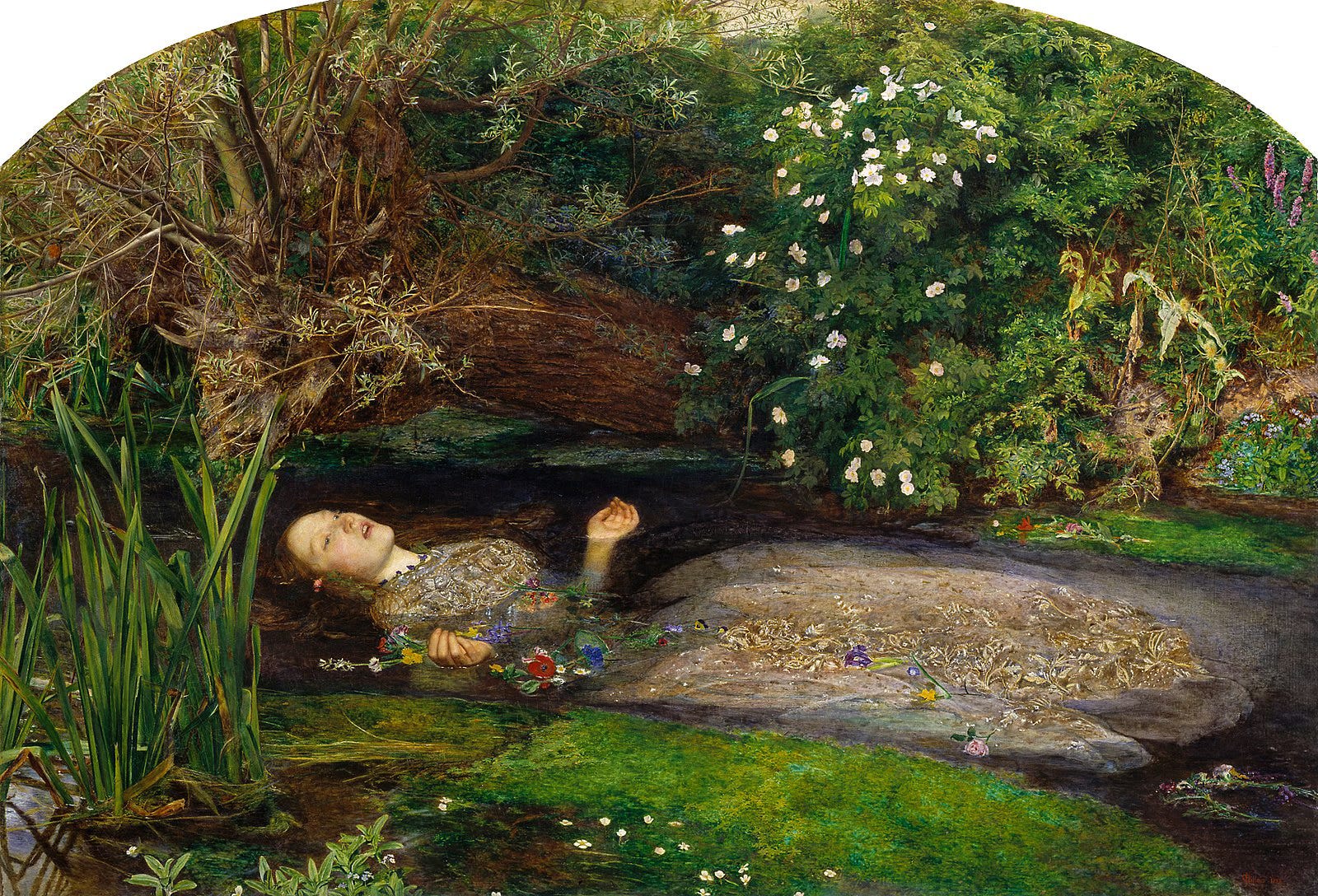
Use of my favourite Pre-Raphaelite painting makes me want to give you two internet high fives (fellow death doula hello and fellow JWW fan) 🙌
Love this! Thank you for sharing this piece of your heart with us. 💕